
What a rodent inspection in Merritt Island should cover
The inspection has to include the outside of the house. Interior signs tell you an animal is present and roughly where it travels. Only the exterior tells you how it arrives and where it gets in, and on Merritt Island, where roof rats arrive from above, that means the roofline.
Exterior and roofline
- Soffit returns and the soffit-to-fascia corners.
- Gable and ridge vents and the condition of their screening.
- Open barrel-tile ends at eaves and rakes.
- Roof-to-wall transitions, dormers, and lower roofs over lanais, carports, and garages.
- Air conditioning line sets, plumbing vents, and electrical, cable, and satellite penetrations.
- Garage door corners and bottom seals, and gaps under exterior doors.
- Approach routes for roof rats: limbs touching or overhanging the roof, palms against the eave, vines, fences, and the utility service drop.
Attic and interior
- Droppings, their size, freshness, and distribution.
- Rub marks along beams, top plates, and pipe runs, which point to entry points.
- Insulation disturbance: runways, tunnels, and nest heaps (see attic rodent cleanup).
- Gnawing on wiring, ductwork, and wood, and any damage that needs another trade.
- Kitchen, pantry, garage, and appliance voids for mouse activity.
Evidence, not impressions
A useful inspection is documented. Each entry point should be photographed and located precisely enough that you, or another provider, could find it again. The same goes for droppings, rub marks, and damage. Documentation makes the findings checkable, and it lets you compare quotes against the same list of problems.
If the findings are vague, such as a general note that the house has entry points, the inspection has not done its job. Ask where each one is and what it is.
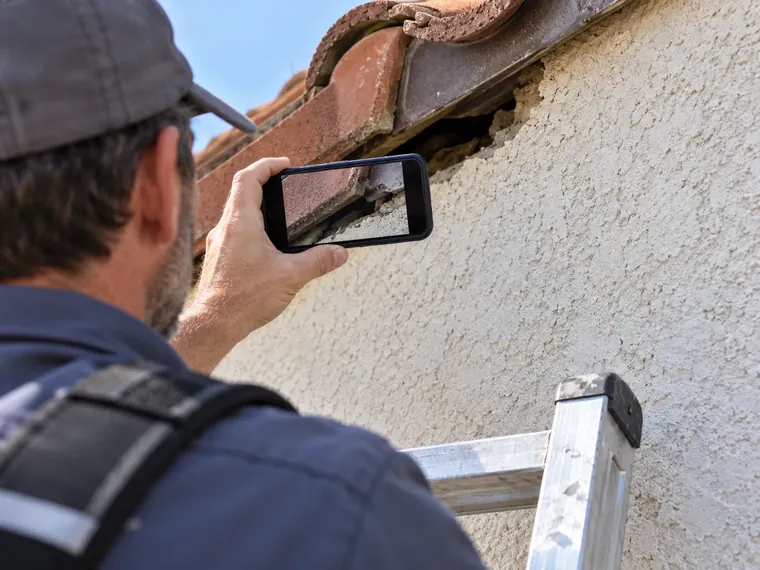
What you should receive after a rodent inspection in Merritt Island
- The species identified, and an assessment of how active and established it is.
- A list of entry points with their locations and photographs.
- Conditions that support the problem: food sources, harborage, and approach routes.
- A recommended sequence: removal, verification, exclusion, and cleanup.
- Items outside pest control scope, such as wiring, roofing, or ductwork, and who should handle them.
- A written quote that prices each phase separately.
Free inspections and what they include
Many companies offer a free inspection or free estimate. That is reasonable, but the price does not tell you what is included. Ask whether the inspection covers the roofline and the attic, or only the interior. An inspection that ends with a bait placement and no exterior assessment has skipped the part that decides the outcome. The rodent control services page covers how to compare what different providers offer.
Inspections for buyers, sellers, and seasonal homes
In a Florida real estate transaction, the standard wood-destroying organism (WDO) inspection covers termites and other organisms that damage wood. It is not a rodent inspection. If you are buying a home and see droppings, old bait stations, or patched vent screens, a separate rodent inspection can tell you whether the activity is current and whether earlier work dealt with the entry points or only the animals.
Seasonal and rental properties benefit from an inspection when they reopen. Activity can build for months in an empty house, and the first evidence is often visual: droppings on a counter or insulation pulled down in a garage corner.
How to prepare for a rodent inspection Merritt Island providers schedule
- Write down when you hear activity, where, and for how long, and note any odor, which can point to a dead rodent. The signs of rodents page explains what to record.
- Photograph droppings or damage from a distance rather than cleaning them up.
- Clear access to the attic hatch, the garage walls, and the areas under sinks.
- Secure pets and unlock side gates so the full exterior can be walked.
- Mention any recent roof work, storm damage, or landscaping changes.
Frequently asked questions
How long does a rodent inspection take?
It depends on the size of the home, the attic access, and how much of the roofline can be examined. A thorough inspection covers the exterior, the attic, and the interior, so ask how long the provider expects and what areas are included.
Does a real estate WDO inspection cover rodents?
No. A Florida wood-destroying organism inspection covers termites and other organisms that damage wood. Rodent activity needs a separate inspection.
Do I need to be home for the inspection?
It helps. You can describe the timing and location of activity, point out evidence you have found, and give access to the attic, garage, and side yards.
Will traps be set during the inspection?
Sometimes, but the inspection's main job is to identify the species, the travel routes, and the entry points. A plan that starts with traps or bait before the exterior has been examined has skipped that step.
How often should a home be re-inspected?
After any rodent work, a follow-up confirms the result held. Beyond that, a check after storm season or major roof or landscaping work is sensible, since both can create new openings or bridges to the roof.
Inspection points on this page draw on UF/IFAS extension material on rat and mouse control, including its integrated pest management approach and entry-point thresholds. This page is general information, not a diagnosis of conditions at any specific property.