Gap sizes that matter for rodent exclusion in Merritt Island
The reason homeowners miss entry points is that the threshold is far smaller than intuition suggests. UF/IFAS extension guidance indicates that rats can squeeze through cracks of roughly half an inch and mice through cracks of roughly a quarter inch. A half-inch gap under a soffit return, at the end of a barrel tile, or where an air conditioning line set passes through a wall does not read as a hole. It reads as a construction detail. To a roof rat it is a door.
This is also why partial sealing fails so predictably. Closing nine of ten openings changes very little if the tenth remains usable, because the animal only needs one. An exclusion scope that does not account for the full exterior envelope is not exclusion; it is patching.
Material specifications, and why foam is not one
Rodents gnaw continuously, and most common sealing materials are simply softer than their incisors. Expanding foam, silicone or acrylic caulk, plastic mesh, standard fiberglass window screen, and duct tape are all chewable. They can be appropriate as an air seal or as a filler behind a proper barrier, but none of them is a rodent-resistant closure on its own.
UF/IFAS rodent-proofing guidance specifies materials by gauge and by opening size:
| Material | Minimum specification | Typical use |
|---|---|---|
| Hardware cloth | 19 gauge or heavier, openings no more than ¼ inch | Vent covers, weep and drainage openings, larger voids |
| Sheet metal | 26 gauge or heavier | Door edges, thresholds, corner patches, chewed timber repair |
| Perforated metal | 24 gauge or heavier, openings no more than ¼ inch | Openings that must retain ventilation or airflow |
The quarter-inch figure is deliberate: it is set below the mouse threshold, not the rat threshold, so a single specification covers both species. If a proposal describes screening a vent, it is fair to ask what gauge and what opening size, and to expect a specific answer rather than a reassurance.
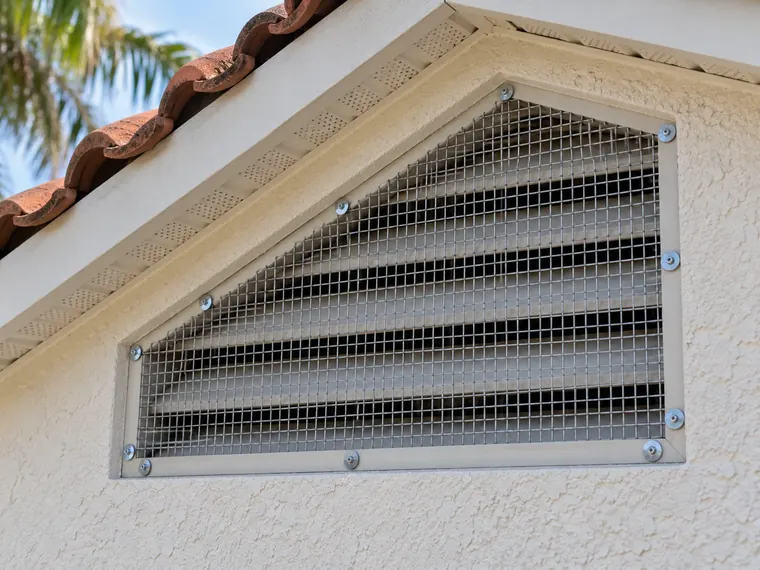
Ventilation is the constraint that makes this work skilled rather than mechanical. Soffit vents, gable vents, ridge vents, and dryer and appliance vents exist to move air, and blocking them outright creates moisture problems, which in Florida's humidity are not a minor trade-off. The correct approach covers the opening with a material that excludes rodents while preserving the airflow the assembly was designed for.
Rodent exclusion in Merritt Island: where openings occur
Because roof rats arrive from above, the productive inspection areas sit high on the structure. Common locations include:
- Soffit returns and the soffit-to-fascia junction, particularly where a roof plane meets a wall and the detail leaves a gap at the corner.
- Gable and ridge vents with damaged, corroded, or oversized screening, or with screening that has separated from its frame.
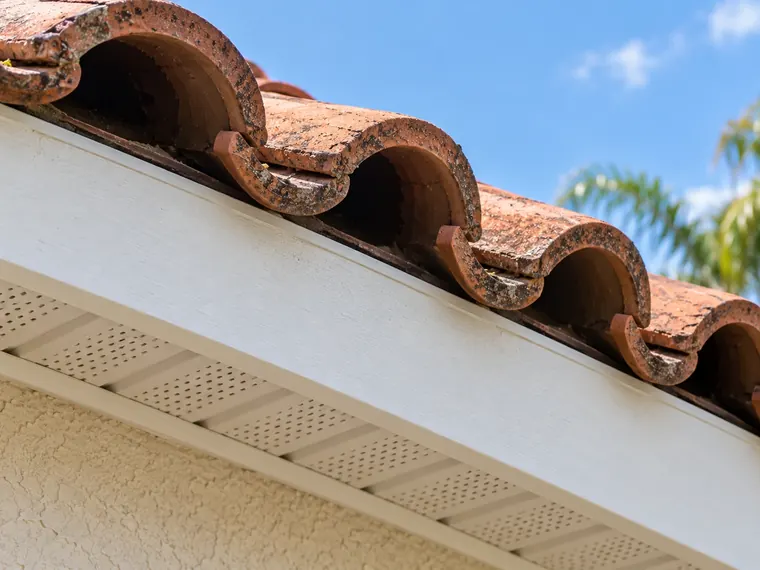
- Tile roof edges, where the open ends of barrel tile at eaves and rakes create ready-made cavities unless they are closed off.
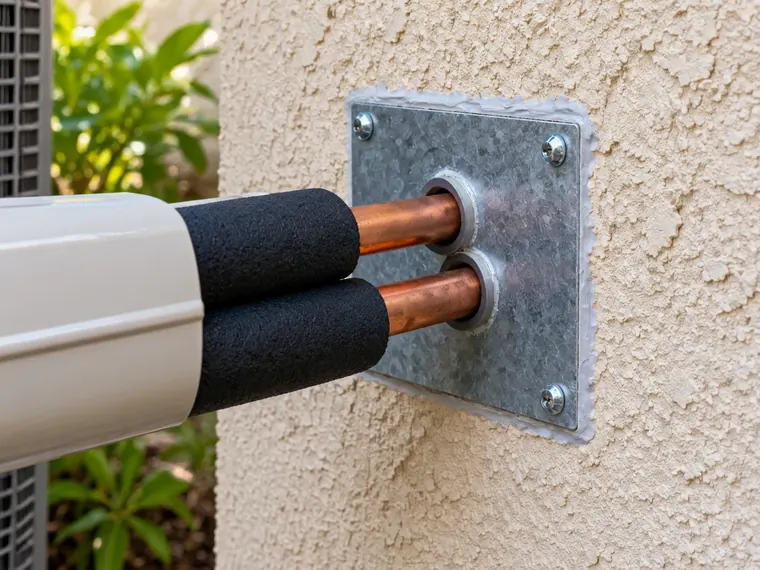
- Utility penetrations: air conditioning line sets, refrigerant and condensate lines, plumbing vent stacks, electrical service entries, and cable or satellite penetrations, where the annular gap around the pipe is frequently sealed with foam alone or not at all.
- Roof-to-wall transitions and dormer junctions, where flashing details and differential movement open small persistent gaps.
- Garage door corners and worn bottom seals, which are among the most common ground-level entries and are easy to check yourself.
- Attic access from an attached structure, such as a lanai, carport, or garage roof that abuts the main roof at a lower level.
- Storm and wind damage: lifted shingles, displaced tiles, separated fascia, and torn vent screening created during the June-to-November season, which frequently explains a problem that appears suddenly in a house with no prior history.
Coastal conditions add a maintenance dimension. Salt-laden air accelerates corrosion of metal screening and fasteners, so a vent screen installed years ago may now be brittle or perforated even where it looks intact from the ground. Exclusion materials in this environment need to be specified with corrosion in mind, and re-checked periodically rather than assumed permanent.
Sequence: this is the part that goes wrong
Sealing an active entry point while rodents are inside traps them in the structure. They die in wall voids, above ceilings, and inside insulation, producing odor that persists for weeks (see dead rodent removal) and sometimes requiring the assembly to be opened to remove the carcass. A sound plan runs inspection, then removal, then a verification step confirming activity has stopped, and only then final closure. Ask what evidence the verification is based on and how long it runs before the last opening is closed.
Reading a rodent exclusion proposal in Merritt Island
A proposal worth accepting identifies openings individually rather than describing the work in the aggregate. For each one it should state where it is, what material will be used, how that material will be fastened, and what the finished detail will look like. "Seal the exterior" is not a scope; it is a heading.
Ask specifically which items fall outside the pest control scope. Replacing rotted fascia, repairing roof decking, re-bedding tile, correcting flashing, or rebuilding a soffit is construction work, and depending on the provider it may require a different licensed trade; the rodent control services page covers how to compare scopes. This matters because an exclusion job can be completed exactly as written and still leave the actual opening in place when the opening turns out to be a structural defect that nobody was contracted to repair.
Ask also about warranty and follow-up. What happens if activity resumes, for how long, and what would void it. And ask whether any guarantee depends on maintenance you are responsible for, such as keeping limbs clear of the roof, since that condition is reasonable but needs to be known in advance rather than discovered during a claim.
What you can reasonably check yourself
From the ground and from inside, a homeowner can usefully check a few things without risk. Look at the garage door seal and the corners where it meets the track. Check that dryer and appliance vent flaps close fully and are not held open by lint or damage. Look at where cable, irrigation, and hose bib penetrations enter the wall at low level. Inside the garage or a finished attic access, look for daylight visible at the roofline, which indicates an opening even when it is too small to identify from outside.
What not to do: do not climb on the roof, do not enter a low or unfloored attic space, and do not begin sealing anything yourself while you still have activity. A homeowner who seals the wrong opening at the wrong time creates the trapped-animal problem described above, and also removes the evidence an inspector would have used to find the route. Note what you see, photograph it if you can do so safely, and leave the elevated work to someone equipped for it.
Frequently asked questions
How small an opening can a rodent use?
UF/IFAS guidance indicates roughly half an inch for rats and roughly a quarter inch for mice. Rodent-resistant materials are therefore specified with openings no larger than a quarter inch, which covers both.
Is steel wool a proper fix?
It is a filler, not a closure. Steel wool packed into a gap can deter chewing in the short term, but it corrodes, compacts, and can be worked loose. Where it is used it should be behind a properly fastened metal barrier of the specified gauge, not instead of one.
Will exclusion guarantee no rodents ever return?
No, and a provider promising that is overstating it. Exclusion closes the accessible routes on the structure as it stands. New damage, storm impact, deferred maintenance, or a new landscape bridge can create new access later, which is why periodic re-inspection is sensible rather than a one-time certificate.
Can exclusion be done while I still hear activity?
The inspection and planning can. The final sealing should not, because closing the route while animals are inside traps them. Expect removal and verification first, with the last openings closed once activity has stopped.
Gap thresholds and rodent-proofing material specifications on this page draw on UF/IFAS extension guidance for rat and mouse control in Florida. This page is general information about how exclusion work is specified and sequenced, not a diagnosis of conditions at any specific property, and it does not substitute for an on-site inspection.