Why rodents die inside walls and ceilings
Most dead rodent removal Merritt Island calls trace to one of three causes, and each points to a different fix. Poison bait is the first: an animal that eats anticoagulant bait does not die at the bait station but wherever it shelters, which is often inside the structure. Poor sequencing is the second: openings sealed while rodents were still inside trap them, and they die in voids and insulation. Unchecked traps are the third, where a capture sits for days in a hot attic. Knowing which applies tells you what to change so it does not happen again. The rodent control services page covers how the work should be sequenced.
Finding the source of the odor
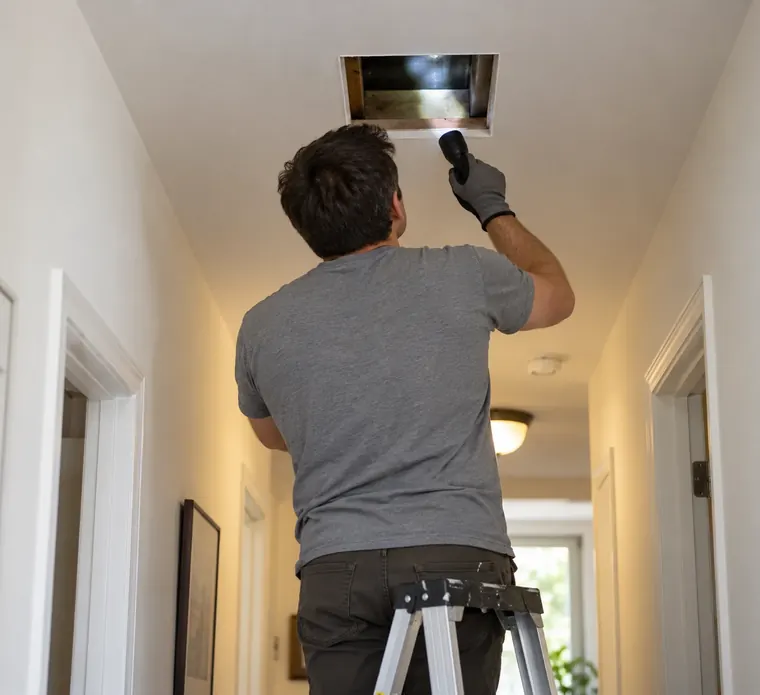
The smell is usually strongest closest to the carcass, but air movement in walls and ceilings can carry it some distance. Other clues narrow the search:
- Flies gathering at one window, light fixture, or ceiling vent, which often appear a few days after the death.
- A stain spreading on a ceiling or wall below or beside the source.
- Where activity was last heard, and where traps or bait were placed.
- Recent sealing work, which suggests an animal trapped behind a newly closed opening.
Florida heat and humidity speed decomposition, so the odor tends to be strong and early. A professional will usually check the attic and accessible voids first, as in a standard rodent inspection, then use the evidence to choose a single access point rather than opening several areas on a guess.
Do not cut into walls blindly
Walls and ceilings carry wiring, plumbing, and sometimes ductwork. Ask how the access point will be chosen, how large it will be, and who repairs the drywall afterward. Patching and painting are often a separate trade, and it is better to know that before the opening is cut.
Safe disposal during dead rodent removal in Merritt Island
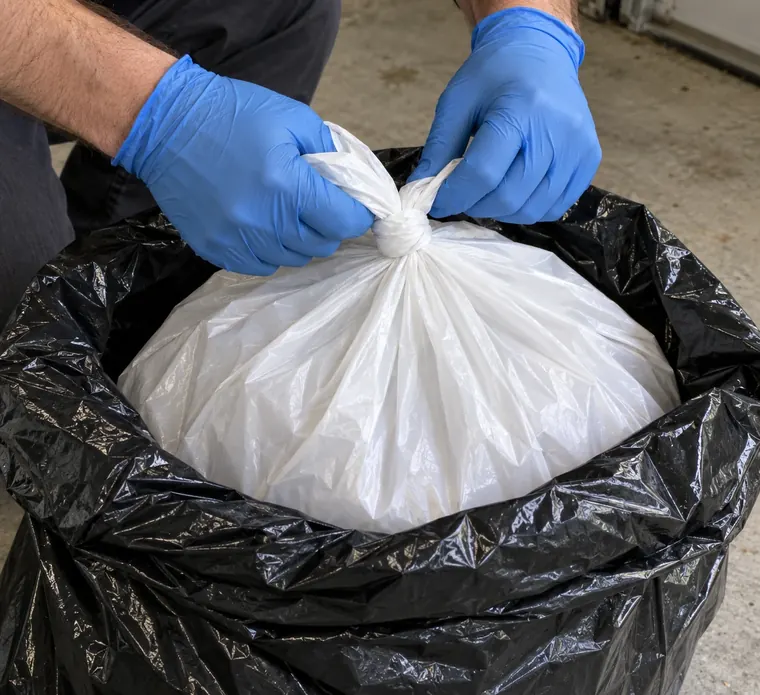
CDC guidance for handling a dead rodent is specific. Wear rubber or plastic gloves. Spray the carcass and the area around it with a disinfectant or a bleach solution of about one part bleach to nine parts water, and let it soak for five minutes. Place the carcass in a plastic bag, seal it, and place that bag inside a second bag before disposing of it in a covered trash can.
Clean the surface the animal was lying on the same way, then wash gloved hands, remove the gloves, and wash bare hands with soap and water. Never handle a dead rodent with bare hands, and do not sweep or vacuum droppings or nesting material near it.
How long the smell lasts, and what actually removes it
The odor persists as long as its source does. In a closed wall or ceiling in warm weather, that can mean weeks. Removing the carcass is the main step but not always the last one: fluids soak into insulation, drywall paper, and wood, and those materials can hold odor after the animal is gone. Contaminated insulation is removed and bagged, and affected surfaces are disinfected. Deodorizers can help afterward, but used on their own they only cover the problem. The attic rodent cleanup page covers insulation removal in more detail.
Preventing repeat dead rodent removal in Merritt Island
Ask for trapping or, for mice, mouse-size traps rather than indoor bait, with a stated check schedule. Insist on verification that activity has stopped before the last entry point is closed. And make sure exclusion closes every route, so new animals are not trapped inside later. Those three steps prevent most dead-animal calls.
What to ask before dead rodent removal in Merritt Island starts
- How will the source be located, and what evidence supports the chosen access point?
- How large will any opening be, and who repairs and finishes it?
- Is removal of contaminated insulation or other soiled material included?
- How will the area be disinfected, and is odor treatment included?
- What will be done about the reason the animal died there?
Frequently asked questions
Can I just wait for the smell to go away?
It will fade eventually, but in a closed wall or ceiling in Florida heat that can take weeks, and fluids soaked into insulation or drywall can hold odor longer. It can also attract flies. Removing the source is faster and more reliable.
Is a dead rodent in the wall a health risk?
Handle it with care. CDC guidance is to wear gloves, disinfect the carcass and surrounding area, and double-bag it for disposal. Do not handle it with bare hands, and do not sweep or vacuum droppings or nesting material nearby.
Who repairs the wall or ceiling afterward?
It depends on the provider. Many pest professionals make the access opening but leave patching and painting to a drywall or general contractor. Ask before the opening is cut.
Why did the rodent die inside the wall?
The common causes are poison bait, openings sealed while rodents were still inside, and traps that were not checked. Each has a different fix, so it is worth identifying which one applies.
What if the smell is coming from the air conditioning ducts?
Report it clearly. A dead rodent in or near ductwork may need an HVAC contractor to access and clean the affected section, and torn duct connections are an HVAC repair rather than pest work.
Disposal and cleanup steps on this page follow published CDC guidance on cleaning up after rodents. Rodenticide information draws on UF/IFAS extension material. This page is general information, not a diagnosis of conditions at any specific property, and does not substitute for advice from a licensed electrician, plumber, HVAC, or building contractor where those trades are involved.