Attic rodent control in Merritt Island: why attics take the damage
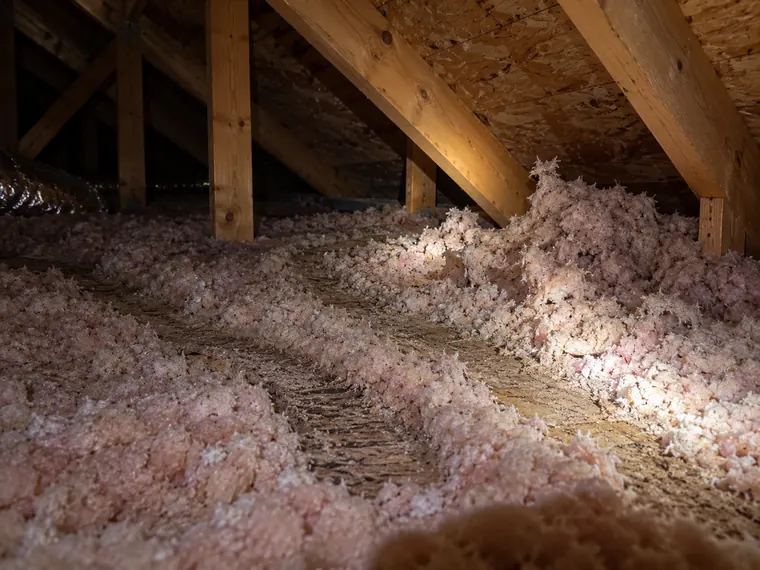
An attic gives a roof rat everything it needs at once: elevation, darkness, stable temperature, and a deep bed of soft material to nest in. UF/IFAS describes roof rats as climbers that prefer to nest off the ground, and specifically names attics, soffits, and hollow walls as locations they occupy. In Merritt Island, where the roofline is reachable from mature canopy across much of the island, the attic is usually the destination rather than an accident.
Damage accumulates in four broad categories, and they are worth separating because different people fix them. Insulation is degraded by compaction, tunnelling, and soiling. Wiring and low-voltage cabling are damaged by gnawing. Ductwork and flexible duct connections are torn or displaced. And the space itself becomes contaminated with urine, droppings, and nesting material, which is the part that carries a health precaution rather than just a repair cost.
Insulation: what actually degrades
Insulation performs by trapping air. Anything that compresses it or fills it reduces the R-value the assembly was designed around, which in a Florida cooling climate shows up as a higher electricity bill rather than a cold house. Rodents compress insulation by traveling over it repeatedly, tunnel through batts and loose fill to create runways, and pull material into heaps to build nests. Soiled insulation then holds odor, and in a humid attic that odor does not dissipate on its own.
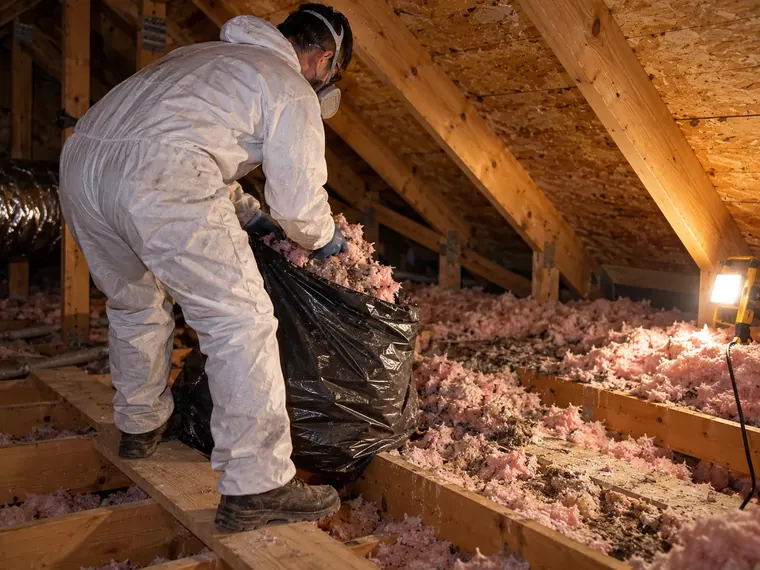
Whether insulation needs replacing is a judgement about extent, not a rule. Isolated soiling in a small area near an entry point may be removed and patched. Contamination spread across a substantial portion of the attic floor, heavily compacted material, or saturated odor generally justifies removal and replacement of the affected area. CDC guidance notes that exposed insulation contaminated with urine and droppings should be placed into plastic bags for removal, and that bagging should be done outside while staying upwind so dust and debris do not blow toward your face.
On any attic rodent control job in Merritt Island, ask for the assessment in terms you can check: which areas are affected, roughly what proportion of the attic, whether removal is partial or complete, what replacement material and R-value are proposed, and whether the quoted price includes disposal. Ask too whether the existing insulation type is known, because older homes on the island may contain materials that require specific handling, and that determination belongs to a qualified assessor rather than a guess.
CDC cleanup procedure, in order
- Ventilate first. Open doors and windows for 30 minutes before cleaning, and leave the area while it airs out.
- Do not vacuum or sweep. CDC states that vacuuming or sweeping urine, droppings, or nesting material can put tiny virus-containing droplets into the air.
- Wear gloves. Rubber or plastic gloves. For heavy infestations, CDC describes appropriate respiratory protection as a half-mask air-purifying respirator fitted with a HEPA filter.
- Wet it thoroughly. Spray droppings and urine with disinfectant, or with a bleach solution of 1.5 cups household bleach per 1 gallon of water, roughly one part bleach to nine parts water, made fresh before use. Let it soak for 5 minutes.
- Wipe, do not sweep. Use paper towels, then dispose of them in a covered garbage can that is emptied regularly.
- Double-bag the rest. Place dead rodents and nesting material in a plastic bag, then place that bag inside a second bag before disposal.
Where a homeowner should stop
The procedure above is published for good reason, but following it in an attic is a different proposition from following it under a kitchen sink. A Florida attic in summer is dangerously hot. Many are unfloored, so the only safe footing is the joists. Lighting is poor, headroom is low, and the material you are there to handle is the contaminant itself. Add potentially damaged wiring and the possibility of encountering wildlife other than rodents, and the risk profile changes substantially.
A reasonable line: small, accessible, well-lit areas in living space or a garage are within the scope of a careful homeowner following CDC procedure. A contaminated attic is not. If you do go up, never disturb material dry, never work alone, and stop if the heat becomes uncomfortable. Otherwise, document what you can see from the hatch and let the inspection handle the rest.
Wiring, ducts, and the things that are not pest work
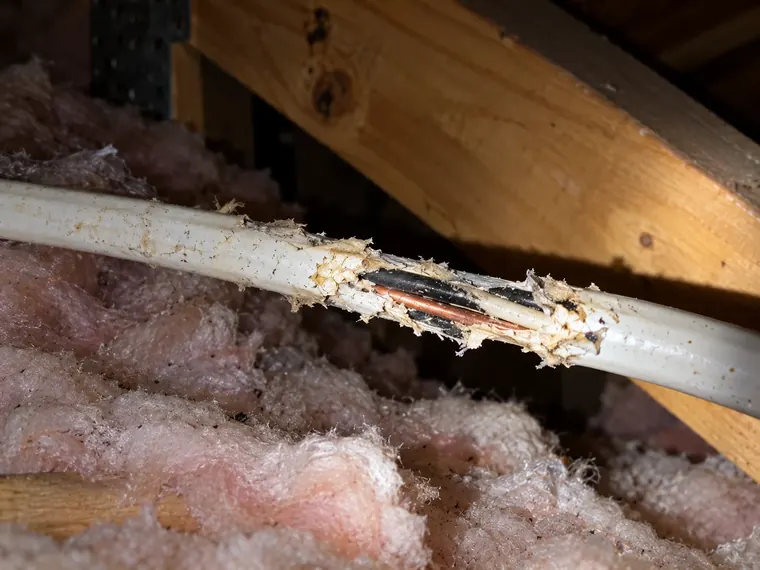
Gnawed electrical wiring is a fire risk, and it is also outside a pest control license. If insulation on a conductor has been damaged, the correct next call is a licensed electrician, and the pest provider's role is to report it clearly rather than to assess or repair it. The same logic applies to torn flexible duct, damaged duct connections, and compromised vapour barriers, which belong to an HVAC contractor, and to damaged decking, fascia, or soffit, which belong to a roofing or general contractor.
This division is the single most common source of surprise on an attic job. A quote can cover trapping, exclusion, contaminated material removal, and new insulation, be completed in full, and still leave chewed wiring and a torn duct in place because neither was ever in scope. Ask explicitly at the outset: what did the inspection find that you are not going to fix, and who should I call for those items.
Odor, staining, and the ceiling below
Persistent odor after activity has stopped usually has one of three sources: saturated insulation, accumulated urine and droppings on surfaces, or an animal that died in a void, covered on the dead rodent removal page. The third is common after poorly sequenced work, where openings were sealed while rodents were still inside, and it may require opening a ceiling or wall to resolve. It is a strong argument for insisting on the verification step before closure, covered on the rodent exclusion page.
Staining on a ceiling below an attic is worth mentioning during the inspection, because it can indicate heavy urine accumulation in one location rather than a roof leak. Distinguishing the two matters: one leads to attic cleanup, the other to a roof repair, and treating the wrong one leaves the problem in place. Do not assume; have it looked at with both possibilities in mind.
Reading an attic rodent control and restoration scope
A clear attic rodent control Merritt Island scope separates the phases and prices them so you can see what you are agreeing to. At minimum it should distinguish inspection and identification; trapping and removal; verification that activity has stopped; exclusion and entry-point closure; removal and disposal of contaminated material; disinfection; insulation replacement with a stated material and R-value; and any follow-up visit, with its trigger and duration stated.
Be careful comparing quotes that are not describing the same work (the rodent control services page sets out each phase). One provider may quote trapping and exclusion only, another the full sequence including insulation replacement. The second will be substantially more expensive and may also be the only one that resolves the problem. Price comparison is only meaningful once the scopes are aligned, so ask each provider to quote the same list of phases rather than their own.
Finally, ask what documentation you will receive: photographs of findings before and after, a list of entry points addressed with materials used, and a record of what was removed. On a job that happens largely out of sight in a space you cannot easily inspect, that record is the main thing that makes the work verifiable.
Frequently asked questions
Can I just vacuum the droppings with a shop vac?
No. CDC guidance is explicit that vacuuming or sweeping rodent urine, droppings, or nesting material can put tiny contaminated droplets into the air. Wet the material with disinfectant, let it soak, and wipe it up with paper towels instead.
What bleach ratio does CDC give?
1.5 cups of household bleach in 1 gallon of water, which is approximately one part bleach to nine parts water, made fresh before use. A general-purpose household disinfectant is also described as acceptable. Soak for 5 minutes before wiping.
Does all the insulation have to come out?
Not necessarily. It depends on how widespread the contamination is and whether the material is compacted or odor-saturated. Limited soiling can sometimes be addressed in place; heavy or widespread contamination generally justifies removal and replacement of the affected area.
Is attic cleanup usually included with rodent removal?
Often not. Removal, exclusion, contaminated material handling, and insulation replacement are commonly separate line items and sometimes separate trades. Ask which are included before comparing prices between providers.
How soon after removal should cleanup happen?
Generally after activity has been verified as stopped, so the space is not recontaminated immediately. Sequencing cleanup before verification can mean paying for the same work twice.
Cleanup procedure, ventilation time, disinfectant ratios, respiratory protection, and insulation handling on this page follow published CDC guidance on cleaning up after rodents. Roof rat nesting behavior draws on UF/IFAS extension material. This page is general information, not a diagnosis of conditions at any specific property, and it does not substitute for an on-site inspection or for advice from a licensed electrician, HVAC, or building contractor where those trades are involved.