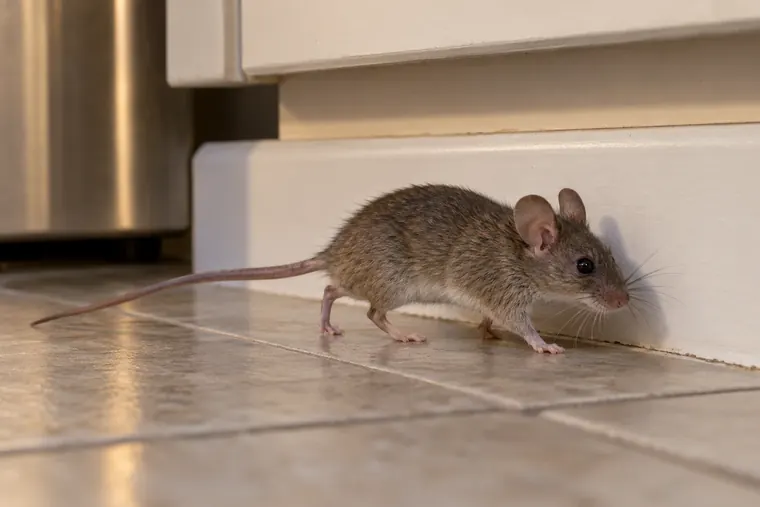
Mouse or rat? How to tell what you have
Getting this right first, ideally during a rodent inspection, changes where the work happens and which traps are used. Droppings are the easiest clue to assess safely. Mouse droppings are small, roughly an eighth to a quarter of an inch, and scattered widely because mice deposit them almost continuously as they move. Roof rat droppings are much larger, commonly around half an inch, and tend to collect along runways and near nests.
Location is the second clue. Roof rats on Merritt Island nest high, in attics and soffits. House mice nest close to food at or near ground level: kitchen cabinets, wall voids near plumbing, appliance cavities, and stored items in a garage. A young roof rat can be confused with a mouse, but it has a heavier head and noticeably larger feet for its body. The signs of rodents page covers droppings, sounds, and gnawing in more detail.
Where house mice live in Merritt Island homes
Mice need very little space and stay within a short distance of their food. In practice that means a predictable set of places:
- Behind and beneath the range, refrigerator, and dishwasher, where the toe kick hides a void.
- Under-sink cabinets, where plumbing penetrations leave gaps in the cabinet back and the wall.
- Pantries and drawers holding dry goods in paper or thin plastic packaging.
- Garages with pet food, bird seed, or stored boxes, especially along the walls and in corners.
- Laundry rooms and water heater closets, where pipes and vents pass through walls.
Nests are built from shredded paper, fabric, cardboard, and insulation, so shredded material in a drawer or a storage box is a strong sign that a nest is close.
How mice get in, and how the openings are closed
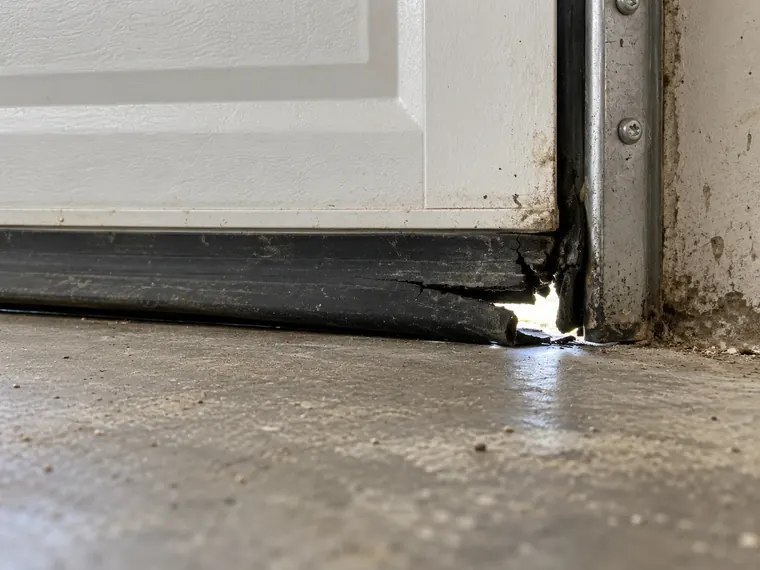
UF/IFAS guidance indicates that mice can squeeze through cracks of roughly a quarter inch. For mouse control in Merritt Island, the low entry points repeat: the corners of garage doors and worn bottom seals, gaps under exterior doors, air conditioning line sets and other utility penetrations near grade, and dryer or appliance vents with damaged flaps.
Closing them uses the same specifications as any rodent exclusion work: hardware cloth with openings no larger than a quarter inch, sheet metal at door edges and corners, and properly fitted door sweeps and garage door seals. Foam and caulk on their own are chewed through. Steel wool can be a filler behind a metal barrier but is not a closure by itself.
How mouse trapping works
CDC guidance recommends snap traps over glue traps and live-capture traps for the same reason as with rats: a trapped, frightened rodent can urinate and increase exposure risk. For mice, the traps must be mouse-size and placed where mice actually travel: along walls, behind appliances, inside cabinets, and in dark corners where droppings have been found, set perpendicular to the wall with the trigger end closest to it.
Because mice forage over a small area, trap spacing is tighter than for rats. The University of Nebraska–Lincoln extension guide to house mouse control suggests spacing traps no more than about ten feet apart in active areas, and notes that an established infestation can call for a couple of dozen properly placed traps in a typical home. One or two traps under the sink rarely resolve anything.
Kitchen cleanup comes after the mice
UF/IFAS notes that rodents contaminate far more food than they eat, through droppings, urine, and hair. Discard any food in packaging that shows gnawing or droppings. Clean affected cabinets and drawers by the CDC method: ventilate, wear gloves, wet the droppings with disinfectant or a fresh bleach solution, let it soak, and wipe up with paper towels. Do not sweep or vacuum droppings. The full procedure is on the attic rodent cleanup page.
Why mouse control in Merritt Island sometimes fails
Most repeat problems trace to one of four things, and a sequenced rodent control plan addresses each. An entry point was missed, usually low on the garage or around a utility line. Food stayed accessible, often pet food or bird seed stored in bags. Trapping stopped as soon as the first mice were caught (the same mistake covered on the rat removal page), leaving the more cautious ones. Or the source is next door: in condominiums and townhomes, mice move through shared walls and utility chases (and occasionally die inside them), so sealing one unit helps but may not end activity if the building has open pathways.
What a mouse control Merritt Island plan should include
- Confirmation that the animal is a mouse and not a young rat.
- A list of entry points found, with the material proposed for each.
- Trap type, number, placement, and check schedule.
- When sealing happens relative to trapping, and how activity is verified as stopped.
- Cleanup of contaminated cabinets, drawers, or garage storage, and whether it is included.
Frequently asked questions
How small a gap can a mouse use?
UF/IFAS guidance indicates mice can squeeze through cracks of roughly a quarter inch. That is why rodent-resistant materials are specified with openings no larger than a quarter inch.
Does one mouse mean there are more?
Often, yes. Mice breed quickly and forage over a small area, so a single sighting or a few droppings usually indicate a nest nearby. Treat it as a sign to look for the nest and the entry point rather than as a single visitor.
Are mice in the garage a problem for the house?
They can be. Attached garages connect to the house through door gaps, utility penetrations, and wall voids, and a garage with stored pet food or bird seed can sustain a population that eventually moves indoors.
How do I clean up mouse droppings in a kitchen?
Follow the CDC method: ventilate, wear gloves, spray the droppings with disinfectant or a fresh bleach solution, let it soak for five minutes, and wipe up with paper towels. Do not sweep or vacuum. Discard food in packaging that shows gnawing or droppings.
Why do mice keep coming back after trapping?
Usually because an entry point was missed, food remained accessible, or trapping stopped too early. In condos and townhomes, mice can also move in from neighboring units through shared walls.
Gap sizes and contamination information on this page draw on UF/IFAS extension material on rat and mouse control in Florida. Trap recommendations follow CDC guidance on trapping rodents, and trap spacing follows the University of Nebraska–Lincoln extension guide to house mouse control. Cleanup steps follow CDC guidance on cleaning up after rodents. This page is general information, not a diagnosis of conditions at any specific property.