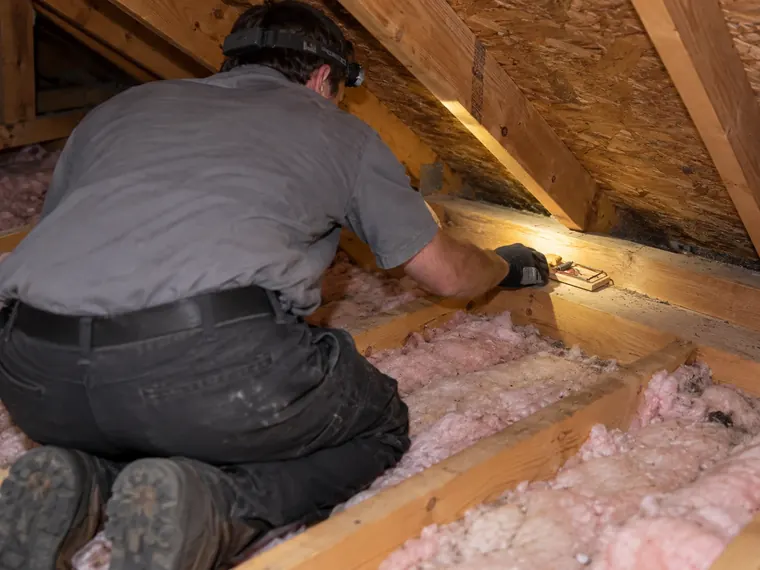
What rat removal in Merritt Island actually involves
Removal is the middle of the job, not the whole of it. An inspection identifies which species is active, where it travels, and how it gets in. Removal deals with the animals already inside. Verification confirms they are gone. Exclusion then closes the route so the next ones cannot follow. A visit that sets traps and leaves without the other three steps is a partial service, whatever it is called.
On Merritt Island the animal is usually the roof rat, a climber that nests high in attics, soffits, and hollow walls. The Norway rat, which burrows at ground level, turns up less often. The difference matters for removal, because traps work where the animal travels: high runways for roof rats, foundation edges and ground-level voids for Norway rats. The roof rat control page covers how to tell them apart.
Why snap traps are the standard for rat removal
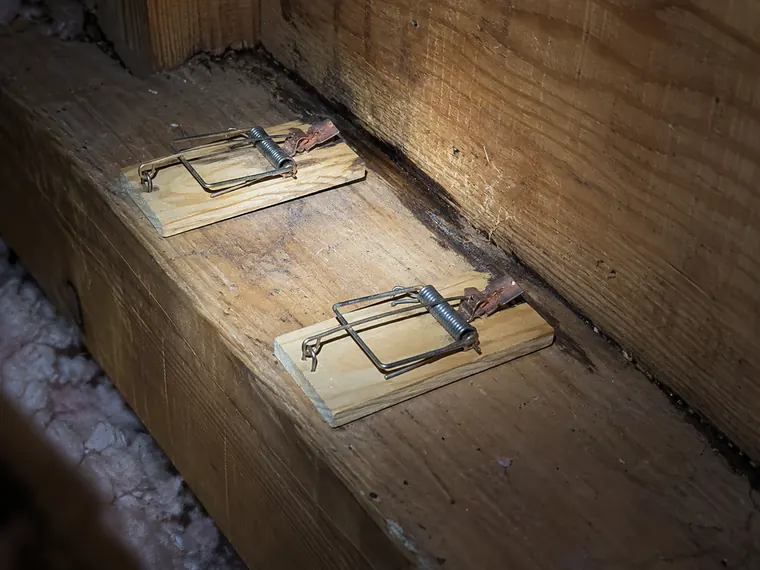
CDC guidance on trapping rodents recommends snap traps and advises against glue traps and live-capture traps. A rodent caught alive in either is frightened and can urinate, which increases the chance of exposure to disease-carrying material for whoever handles the trap. A snap trap kills quickly and makes each capture easy to confirm.
Size and placement matter as much as the trap. Rat-size snap traps are needed for rats; a mouse trap will injure or miss one. CDC guidance is to set traps perpendicular to the wall, with the trigger end closest to it, because rodents travel with a flank against a surface. In an attic that means along top plates, beams, and the edges of openings, wherever rub marks and droppings show the route.
Traps should be numerous enough to cover every active runway at once. A handful of traps in the middle of the attic floor catches little and teaches the survivors to avoid them.
Where poison fits, and why it usually comes last
UF/IFAS describes rodenticides as one component of integrated pest management, used after inspection, sanitation, trapping, and exclusion rather than instead of them. Inside a structure there is a practical problem as well: a poisoned rat does not die where you can reach it. It dies in a wall void, under insulation, or above a ceiling, and the result is a dead rodent and an odor problem. Outdoors, second-generation anticoagulants such as brodifacoum and bromadiolone carry a secondary poisoning risk to cats, dogs, owls, and hawks. Ask what is proposed and why trapping cannot do the work.
How long rat removal in Merritt Island takes
It depends on how many animals are present and how accessible the space is. In a typical pattern, captures come quickly in the first days as the most active animals find the traps, then taper off. The tail of the job is what matters. CDC trapping guidance is to keep trapping for about a week after the last rodent is caught, because the last animals are often the most cautious.
Ask how often the traps will be checked. A trap holding a dead rat for days in a Florida attic becomes an odor and fly problem, and an unchecked trap that has been sprung is no longer catching anything. The check schedule, and what triggers an extra visit, should be stated up front.
Verification: how the job proves the rats are gone
Verification is the step most often skipped and the one that decides whether sealing is safe. It should rest on evidence rather than a quiet night or two:
- No new captures over a defined period after the last catch.
- No fresh droppings in areas that were cleaned specifically so new ones would show.
- No new gnawing, and no fresh disturbance of insulation along known runways.
- Sounds that used to start after dusk have stopped.
Only then should the final entry points be closed. Sealing while rats are still inside traps them in the structure, which is the most common cause of a dead animal in a wall.
Rat removal around children, pets, and wildlife
Traps in an attic or closed wall void are out of reach of children and pets, which is one reason removal is usually concentrated there. Traps used anywhere accessible, including garages and outdoors, belong inside a lockable, tamper-resistant box. Outdoors that also protects birds and other non-target animals, which matters on an island bordered by protected land and wildlife habitat.
If you have pets that can reach the attic hatch, a garage, or the lanai, say so on the first call so the placement plan accounts for it.
What a rat removal Merritt Island quote should state
- The type and number of traps, and where they will be placed.
- How often traps will be checked, and for how long trapping continues after the last capture.
- How carcasses are handled and disposed of.
- What evidence will be used to verify that activity has stopped.
- When exclusion happens, and whether it is included or quoted separately.
- What is not included: cleanup, insulation, and repairs by other trades.
Frequently asked questions
How long does rat removal take?
It depends on the number of animals and access to the space. Captures usually come quickly at first and then taper. CDC trapping guidance is to keep trapping for about a week after the last rodent is caught, so expect the job to run past the first quiet night.
Are glue traps a good option for rats?
CDC advises against glue traps and live-capture traps, because a trapped, frightened rodent can urinate and increase the risk of exposure to disease-carrying material. Snap traps sized for rats are the standard recommendation.
Why not just put out poison bait?
A poisoned rat usually dies where it hides: inside a wall, under insulation, or above a ceiling, which creates an odor problem that is hard to reach. Outdoor anticoagulant bait also carries a secondary poisoning risk to pets and birds of prey. UF/IFAS places chemical control after inspection, sanitation, trapping, and exclusion.
Can I trap the rats myself?
In a garage or other accessible space, careful use of rat-size snap traps in a tamper-resistant box is possible. Attic trapping is a different matter because of heat, unsafe footing, wiring, and contaminated material, and trapping alone does nothing about the opening the rats are using.
When are the entry points sealed?
After verification shows that activity has stopped. Sealing while rats are still inside traps them in the structure, which is the most common cause of a dead animal in a wall.
Trapping recommendations on this page follow published CDC guidance on trapping rodents and cleaning up after them. Integrated pest management and rodenticide information draws on UF/IFAS extension material on rat and mouse control and on rodenticides. This page is general information, not a diagnosis of conditions at any specific property.